
Fortitudo: Strength Is What's Left After the Crack
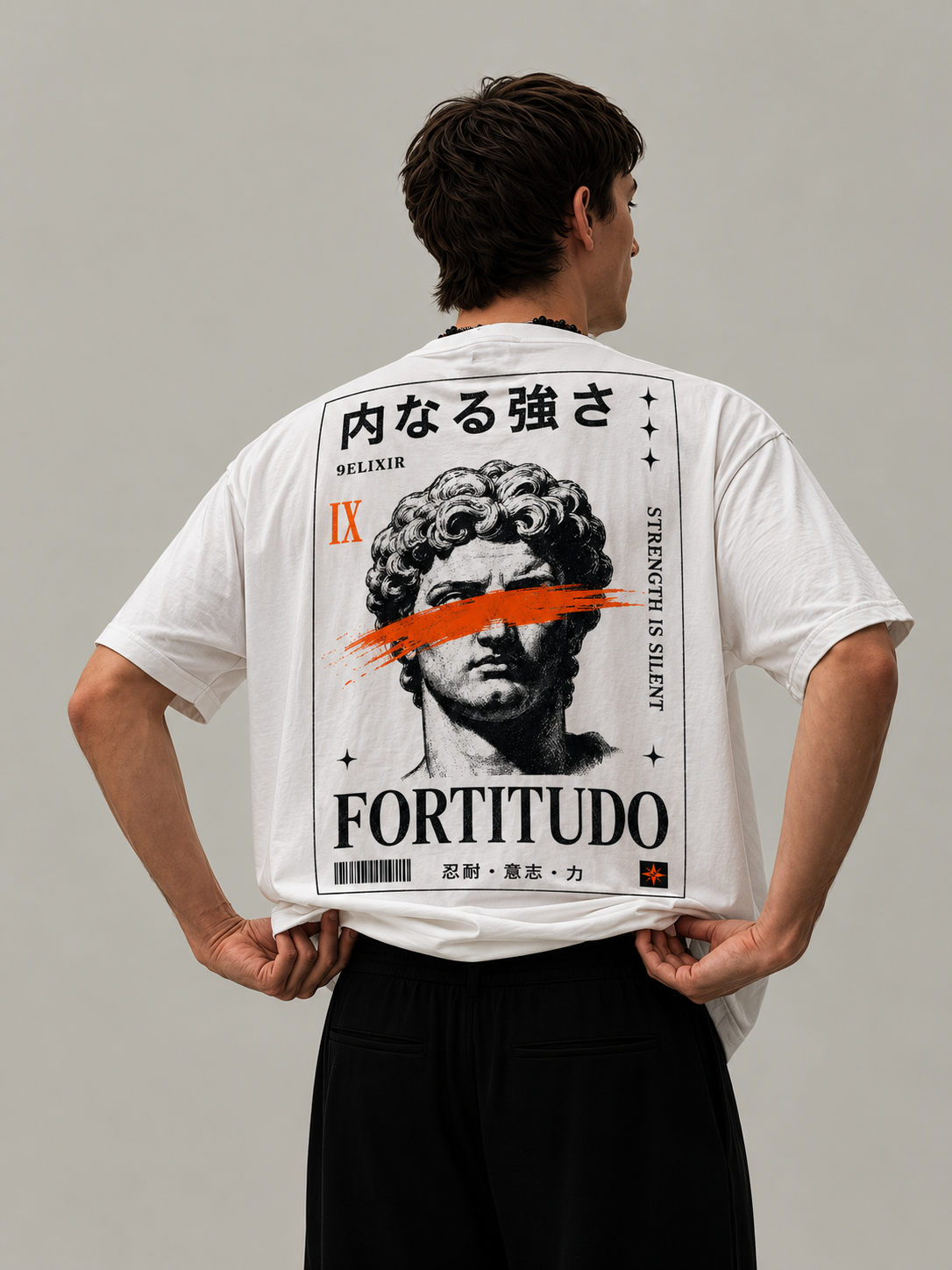
Fortitudo is the Latin word for courage, but it does not mean what the films mean by it. It is not the charge, the shout, the single brave second. It is the long kind of strength — the one that holds when nothing is watching.
One of the four
The Romans inherited from the Greeks a set of four cardinal virtues, the load-bearing pillars of a good life: prudentia (wisdom), iustitia (justice), temperantia (self-control), and fortitudo (fortitude). Three of them are about knowing and restraining. Fortitudo is the one about enduring. The Stoics defined courage not as the absence of fear but as the knowledge of what is worth bearing — and then the bearing of it. Seneca, who would one day be ordered to take his own life and met it calmly, wrote that no one deserves more admiration than a person who handles hard things well. He did not mean a person who feels no fear. He meant one who is afraid and stands anyway.
Strength that shows its breaks
We drew Fortitudo as a marble bust split by a single orange fault-line, under the Latin word and the kanji 内なる強さ — “strength within.” The crack is the point. Unbreakable strength is a story told by people who have never been tested; real fortitude is visible damage that still holds its shape. There is a Japanese craft, kintsugi, that mends broken pottery with gold so the seam becomes the most beautiful part of the object. The fault-line works the same way: the break is not hidden, it is lit.
That is the Stoic promise with the marble stripped off. You will be cracked — by loss, by work, by the ordinary grind of years. Fortitude is not avoiding the crack. It is what is still standing on the other side of it, and the quiet knowledge that you held.
Off-white, worn quietly
It sits on a dense off-white tee because this virtue was never loud. The bright orange line is the only heat on the piece — the fracture catching light. Strength worn quietly, which is the only way it was ever worth wearing.