
Kallos: Beauty as Power, Not Decoration
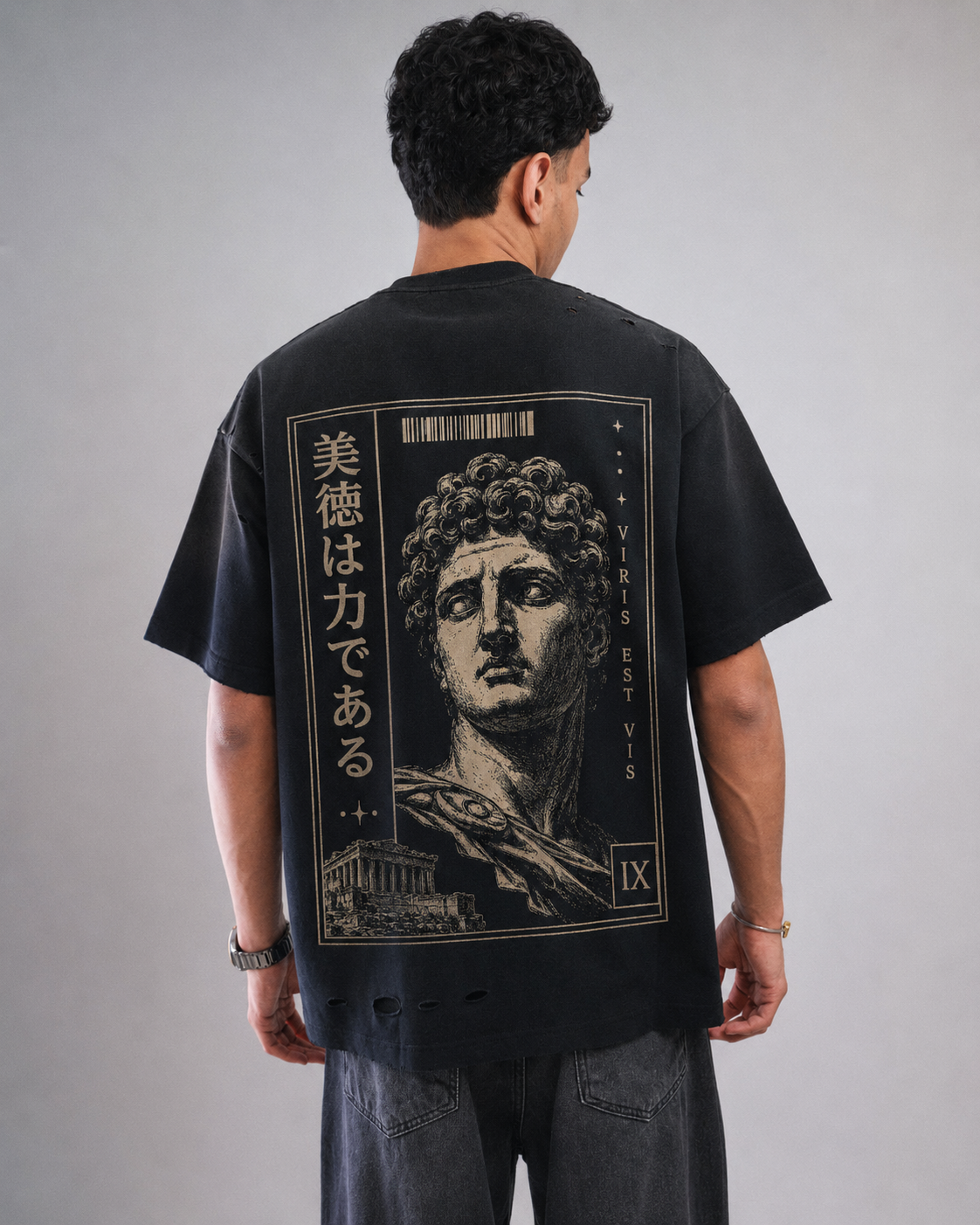
Kallos. Beauty — but not the thin modern version that means “nice to look at.” To the Greeks, beauty was closer to a force: order made visible, and therefore a kind of power.
Beautiful and good
The Greeks had a compound ideal, kalokagathia — from kalos (beautiful) and agathos (good). The beautiful and the good were imagined as two faces of one thing: a life in proportion, a character in harmony, showing itself outward. Beauty was not the opposite of substance; it was substance you could see. (They knew the tension, too — Socrates, the wisest man in Athens, was famously ugly, and they loved the paradox precisely because it tested the rule.)
Plato pushed it furthest. In the Symposium he describes beauty as a ladder: you begin by loving one beautiful thing, and if you are honest about what moved you, it pulls you upward — toward beauty itself, the highest and most visible of the eternal Forms. Beauty, for Plato, is the one perfection that leaks into the visible world. It is the thing that calls the soul up.
Beauty is power
We set Kallos as a marble bust framed in an arch, beneath the kanji 美しさは力である — “beauty is power.” Not power over others; power as gravity. The beautiful thing does not demand attention, it bends the room toward it — the way one well-made object can quietly shame everything cluttered around it. That is why restraint reads as luxury, and why the most powerful style is almost always the most edited.
Washed charcoal, already lived-in
The base is a washed charcoal that behaves like a tee you have owned for years — a colour between black and stone, so the white statue and the Japanese type float just above it. Beauty that already looks lived-in, because the kind worth having was never about being new.